


As a premier global component, the SKF Tapered Roller Bearing stands out as the industry standard for handling severe composite loads. This comprehensive pillar page guide serves as the definitive technical manual and procurement resource for engineers, maintenance, repair, and operations (MRO) professionals, and B2B purchasing managers looking to maximize system reliability using SKF engineering solutions.
Section 1: Introduction to SKF Tapered Roller Bearings
At its foundational level, a tapered roller bearing is engineered with a unique geometry designed to eliminate sliding friction at the roller-to-race interface. The internal assembly consists of four basic elements: the inner ring (cone), the outer ring (cup), tapered rollers, and a window-type cage that uniformly retains and spaces the rolling elements.
The defining characteristic of this design is that the tapered surfaces of the rollers and the raceways are developed so that all individual conical apexes converge at a common point along the central main axis of the bearing. This geometric precision ensures true rolling motion, dramatically decreasing operating friction and heat generation.
Because of this specific angular configuration, these bearings are uniquely capable of supporting combined loads (simultaneous heavy radial and axial forces). The axial load-carrying capacity is directly proportional to the contact angle (alpha) of the outer ring raceway; a larger contact angle means the bearing can handle greater thrust forces.
The Physics of Friction: How SKF Tapered Roller Bearings Manage Combined Loads
Section 2: Engineering Standards & Classifications
Industrial applications globally are split between two regional dimensional standards: Metric and Inch. SKF manufactures exhaustive portfolios in both boundaries, but understanding their metallurgical and tolerance boundaries is vital during engineering design or retrofitting legacy machinery.
Metric vs. Inch Standardizations
Metric Bearings: Designed in accordance with international standard ISO 355. They are grouped by boundary dimension plans (covering specific angle series, diameter series, and width series) making system standardization highly systematic.
Inch Bearings: Designed based on the American standard ANSI/ABMA 19.2. They utilize a distinct lettering and numbering system that references individual cup and cone combinations rather than a single standardized unit assembly.
Metric vs Inch SKF Tapered Bearings: Dimensional Differences Explained
Material Engineering and Manufacturing Excellence
SKF applies premium-grade, ultra-clean carbon-chromium steel for its structural components. To survive the most punishing industrial environments, SKF incorporates specialized heat-treatment processes that ensure high dimensional stability over extended operation cycles and advanced surface finishes that optimize lubricant film formation.
For operations demanding absolute elite performance metrics, SKF offers its specialized proprietary performance line.
A Deep Dive into SKF Explorer Tapered Roller Bearings Technology
Section 3: Decoding Part Numbers & Designations
An SKF designation is more than a random sequence of characters; it is a structured alphanumeric code that conveys exact parameters including dimensional boundaries, cage designs, internal clearances, tolerances, and specific modifications.
Common Designations Demystified
Basic Designation: Usually consists of 5 digits or a combinations of letters/numbers (e.g., 32215), identifying the bearing type and boundary dimensions.
Prefixes: Used to identify components of a complete bearing (e.g., K- indicates a cup and cone kit assembly).
Suffixes: Critical indicators of internal or external modifications. Missing a suffix during MRO replacement can lead to catastrophic premature field failure.
B: Steep contact angle for enhanced axial load capacity.
J2: Window-type stamped steel cage, roller centered.
TN9: Injection-molded glass fiber reinforced polyamide 66 cage.
CL7C: High-precision design for automotive pinion applications.
Decoding SKF Tapered Roller Bearing Suffixes and Designation System
Section 4: Key Technical Specifications
To assist procurement and engineering departments in mapping out immediate constraints, the following comparative baseline table highlights primary SKF series variants, load limits, and standard application guidelines.
Section 5: Industrial Application Landscapes
Because of their sheer mechanical versatility, SKF tapered roller bearings are deployed across thousands of industrial sectors. However, two primary domains require deep focus due to their unforgiving operational demands.
Heavy-Duty Mining & Construction Equipment
In aggregate mining and earthmoving environments, bearings are subjected to severe particulate contamination, extreme shock loads, and high vibration. Components installed in vibrating screens, crushers, and heavy excavators must rely on optimized roller profiles to prevent stress concentration at the roller edges.
Selecting SKF Roller Bearings for Heavy-Duty Mining & Construction Equipment
High-Efficiency Automotive Transmissions
Modern automotive drivetrains and commercial vehicle differentials demand compact configurations that optimize fuel economy by reducing parasitic friction. SKF designs low-friction variants that reduce operational drag torque up to 50%, maintaining precise shaft alignment under varying gear speeds.
Optimization Guide: SKF Tapered Bearings in Automotive Transmissions
Section 6: Installation, Maintenance & Troubleshooting
No matter how advanced the metallurgy of an SKF bearing is, its field lifespan is completely dependent on precision mounting practices, accurate setting of internal clearances, and calculated lubrication schedules.
Preload Adjustment Precision
Single row tapered roller bearings must always be adjusted against a second bearing or mounted in matched pairs to establish an equilibrium. Setting the correct preload (creating intentional controlled internal stress) eliminates structural play, ensures accurate shaft guidance, and optimizes load distribution across the entire roller complement.
Step-by-Step Guide to Adjusting Preload on SKF Tapered Roller Bearings
Critical Troubleshooting: Heat & Friction
When a bearing begins running hot, operations must react immediately to prevent catastrophic seizing. Thermal spikes typically point to specific mechanical failures, such as excessive preloading, over-greasing, or extreme shaft misalignment.
Troubleshooting Guide: Causes and Cures for SKF Tapered Bearing Overheating
Lubrication Management
Lubrication forms a micro-thin hydrodynamic layer that separates the rollers from the raceways. Selecting between synthetic greases or oil baths relies entirely on running speeds and environmental temperatures. Over-lubrication can cause churning and extreme heat, while under-lubrication triggers metal-on-metal micro-spalling.
Lubrication Best Practices for Extended SKF Roller Bearing Lifespan
Section 7: Anti-Counterfeiting & B2B Procurement Strategy
In the B2B supply chain, purchasing premium components means protecting your operation against the global influx of counterfeit merchandise. Additionally, tracking international commercial factors is essential for accurate budgeting and annual contract scheduling.
Securing the Integrity of Your Inventory
Counterfeit bearings are a massive threat to industrial safety and plant profitability. Low-grade steel counterfeits are often packaged in replicated boxes using high-end laser markings to deceive uncritical buyers. Procuring parts requires strict auditing of supply lines and digital verification.
How to Spot Counterfeit SKF Bearings: 5 Critical Verification Steps
Market Economics & Global Logistics
Navigating market volatility requires checking raw material steel indexing, global logistics overheads, and cross-border distribution lead times. Working with stable distribution channels enables factories to hedge against sudden industrial price shifts.
B2B Sourcing: SKF Tapered Roller Bearing Price Trends and Cost Drivers
Frequently Asked Questions (FAQ)
Q1: How do I find the correct clearance or preload for an SKF tapered roller bearing?
A: The precise preload or clearance values cannot be determined generically; they must be calculated based on your specific application requirements. Factors include the external operational loads, expected thermal expansion of the shaft and housing, and the target rotational speed.
Q2: What is the average lifespan of an SKF Explorer tapered roller bearing under heavy loads?
A: Under standard operational design conditions, SKF Explorer bearings can deliver up to three times longer service life compared to conventional standard-grade alternative products.
Q3: How can I verify the authenticity of my SKF bearings instantly?
A: The most efficient, secure method for instant verification is using the official SKF Authenticate mobile application. Users take high-resolution photographs of the physical box markings, the product serial numbers, and the item's laser etchings. This data package is transmitted directly to SKF quality verification experts for absolute confirmation, eliminating the risk of accidental counterfeit deployment.
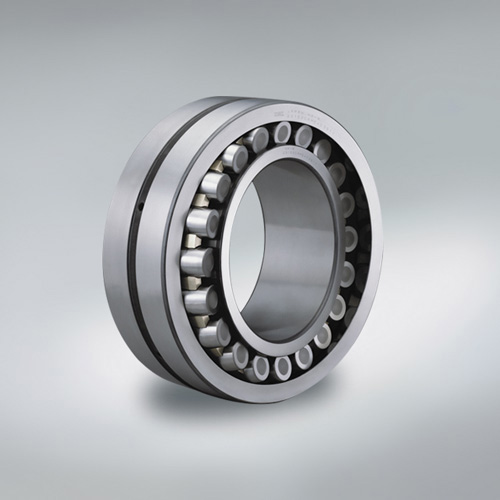
 Spherical roller bearingsCharacteristics and uses of spherical roller bearings:
Spherical roller bearings have two rows of rollers and are mainly used to bear radial loads, but can also bear axial loads in any direction. This type of bearing has a high radial load capacity and is particularly suitable for working under heavy loads or vibration loads, but cannot bear pure axial loads; it has good spherical performance and can compensate for coaxiality errors.
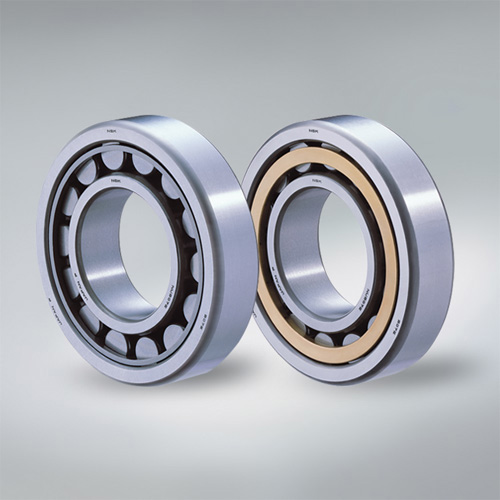
Specific classification and model comparison: Cylindrical roller bearingsCharacteristics and uses of cylindrical roller bearings:
Cylindrical roller bearings are separable bearings, whose inner and outer rings are in linear contact with the rollers, with a small friction coefficient and a high maximum speed. The bearings are easy to install and disassemble, and can generally only bear radial loads. Only single-row cylindrical roller bearings with inner and outer ribs can bear smaller quantitative axial loads or larger clearance axial loads; bearings with single ribs can only bear axial loads in one direction; cylindrical roller bearings without inner or outer rings are used in parts with limited radial dimensions. The surface of the journal or housing hole is directly used as the rolling surface, and its surface hardness, processing accuracy and surface quality should be similar to the raceway of the ring.
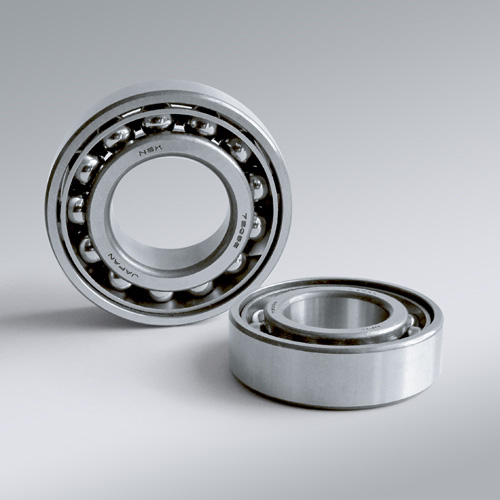
Cylindrical roller bearings can be divided into single-row, double-row and multi-row cylindrical roller bearings according to the number of rows of roll Angular contact ball bearingsCharacteristics and uses of angular contact ball bearings:
Angular contact ball bearings have a higher maximum speed limit and can bear radial and axial loads at the same time, as well as pure axial loads. Their axial load capacity is determined by the contact angle and increases with the increase of the contact angle.
Navigation
Send Us A Message
consult

Jinan Lanyu Import & Export Co., Ltd. is a bearing manufacturing enterprise specializing in the import and export trade of bearings. Covering a total area of 50,000 square meters, the company boasts an annual production capacity exceeding 20 million sets and is dedicated to the manufacture of high-quality bearings.

First class quality service and professional after-sales team.
Get in Touch
*We respect your confidentiality and all information are protected.
