


In the demanding world of heavy-duty industrial machinery, automotive powertrains, and mining equipment, mechanical components must endure extreme operational stress. Among these components, the tapered roller bearing stands out as an irreplaceable engineering solution. Unlike standard ball bearings, which excel primarily under pure radial loads, tapered roller bearings are explicitly engineered to manage heavy combination (simultaneous radial and axial) loads. This unique capability stems from their distinct geometric design, making them the foundational backbone of heavy-duty rotating shafts globally.
This comprehensive guide serves as an authoritative knowledge hub for mechanical engineers, procurement managers, and industrial buyers. It covers fundamental mechanical principles, component material selection, strict international standards, step-by-step maintenance protocols, and strategic B2B sourcing insights to optimize your machinery's return on investment (ROI) and secure your supply chain.
1. Introduction to Tapered Roller Bearings
What is a Tapered Roller Bearing?
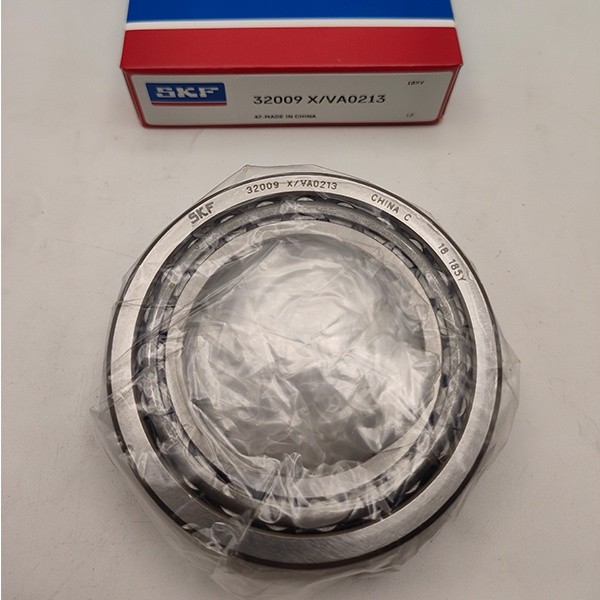
A tapered roller bearing is a rolling-element bearing designed with tapered inner and outer raceways running along conical rollers. This precise geometry allows the bearing to handle high-stress operating environments smoothly. The assembly consists of four critical, interdependent components: the inner ring, the outer ring, the tapered rollers, and the roller retainer.
In the industrial bearing sector, the inner ring, rollers, and cage are combined and sold as a single, inseparable unit known as the Cone, while the separate outer ring is referred to as the Cup. To understand how these parts interact and where potential technical risks lie, engineers must analyze each component's distinct function and primary failure modes.
Mechanical Principles & How They Work
The exceptional capability of this component relies entirely on its conical geometry. The projection lines of the raceways and the true apexes of all individual tapered rollers are engineered to meet at a single, common point on the bearing's central longitudinal axis. This specific configuration achieves pure rolling motion, preventing the rollers from sliding or skidding across the raceway tracks. As a result, frictional torque is reduced at the contact surfaces.
       Bearing Axis
-----------------•-----------------
                /
               /     Roller Apexes Meet
              /        at a Single Point
             /
The contact angle between the roller and the center line of the bearing dictates how much load can be transferred through the internal components. When a radial load is applied, an induced axial force is generated inside the bearing due to the angled raceways. This internal force must always be counterbalanced by an equal external force or an opposing bearing.
To explore the mathematical formulas governing these internal forces, along with detailed elastic deformation equations under high-stress operating conditions, please consult our dedicated technical resource:
2. Main Types and Classifications
Understanding Different Configurations
Industrial machinery requires specific bearing architectures to handle diverse loading scenarios, shaft rigidities, and rotational speeds. Tapered roller bearings are classified by the number of roller rows integrated into the assembly: single-row, double-row, and four-row configurations.
For a comprehensive breakdown of standard industry nomenclatures, metric-to-inch boundary dimensions, and specialized configuration modifications, read our complete guide:
Component Comparison: Selecting Rows Based on Load Direction
Selecting the proper row configuration is a critical engineering decision that directly impacts system rigidity, total load capacity, and operating lifespan.
Single-row assemblies can only support axial loads from one direction. Therefore, they are almost always mounted in pairs (face-to-face or back-to-back arrangements) to handle bi-directional thrust forces.
Double-row assemblies consolidate two single-row sets into one unit, utilizing a single double-cup or double-cone configuration. This arrangement handles heavy bi-directional axial thrust loads and provides excellent structural rigidity, making it ideal for gearboxes and hoisting machinery.
Four-row configurations maximize heavy-duty capacity by combining multiple cups, cones, and spacers. These are used almost exclusively in high-impact heavy industries where extreme radial forces are normal.
To determine the ideal setup for your machine's layout, evaluate the distinct performance metrics across these configurations detailed in the table below. For deeper application engineering scenarios, see our in-depth comparison:
3. Engineering & Technical Selection Specifications
Dimensions and Standard Size Charts
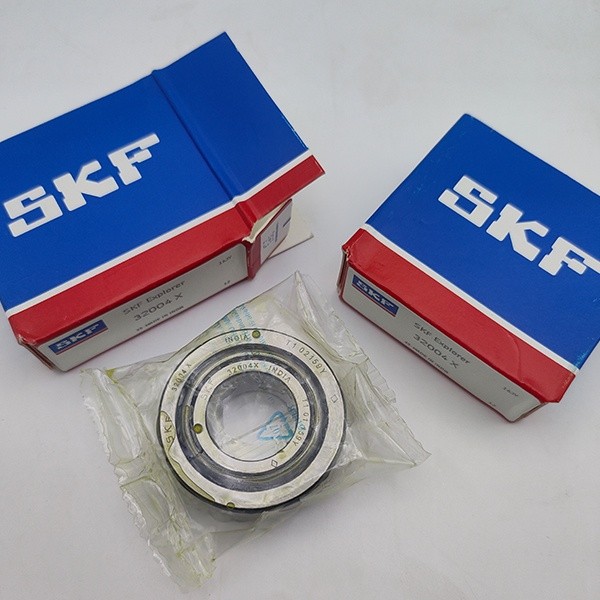
When specifying a bearing for an OEM project or finding an exact aftermarket replacement, engineers must navigate international standardized boundary dimensions. Metric series bearings are governed globally by ISO 355, which establishes a specific matrix of dimension series combining the contact angle, diameter series, and width series. Conversely, inch-series bearings follow the ANSI/ABMA standards. These use an entirely different numbering system where the cup and cone have distinct part numbers based on their load-carrying capacity and cross-sectional thickness.
Understanding these prefix and suffix codes prevents catastrophic assembly mismatches. For example, a suffix like "J" signifies compliance with ISO standard boundary dimensions for the cup and cone assembly, ensuring drop-in compatibility across international brands.
To help cross-reference these systems, review our complete technical matrix:
Load Capacities (Radial vs. Axial Loads)
Evaluating load capacity requires a thorough analysis of the internal contact angle (alpha), which typically ranges between 10° and 30°. The magnitude of this angle directly governs the ratio of radial to axial load capability. A shallow contact angle maximizes the bearing's radial load rating but limits its axial capacity. As the contact angle increases, the rollers sit more vertically relative to the shaft, boosting the axial thrust capacity significantly while decreasing the radial load ceiling.
Calculating the exact equivalent dynamic load (P) under combined forces requires applying precise ISO formulas using the radial load (F_r), axial load (F_a), and the bearing's specific thrust factor (Y). For a complete step-by-step calculation walkthrough and to use our automated load estimation scripts, access our deep-dive analysis here:
Material Grade and Selection (Durability Factors)
Operating lifespans under demanding field conditions depend heavily on the metallurgy of the cup, cone, and rollers. The industry standard for high-performance bearings is through-hardened high-carbon chromium steel (GCr15 / AISI 52100), heat-treated to an optimal hardness range of 60 to 64 HRC. This material provides excellent rolling contact fatigue resistance and wear protection under standard operating conditions.
[Standard Loadings] --------> GCr15 / AISI 52100 (Through-Hardened)
[High-Shock / Impact] ------> 20CrMnTi / AISI 8620 (Case-Carburized Core)
However, for extreme applications involving high shock loads, heavy vibrations, or structural misalignment, through-hardened steel can be susceptible to sudden, brittle cracking. In these specialized scenarios, case-carburized (case-hardened) low-carbon alloy steels, such as 20CrMnTi or AISI 8620, are preferred. Case-carburization creates a hard, wear-resistant outer surface layer while maintaining a ductile, resilient inner core that absorbs heavy external impacts without fracturing.
To determine the ideal material composition, alloy type, and surface coating for highly corrosive or contaminated operating environments, refer to our comprehensive metallurgical guide:
4. Installation, Maintenance, and Troubleshooting
Proper Installation and Clearance Adjustment
Unlike deep groove ball bearings with fixed internal clearances, tapered roller bearings offer a key operational benefit: their internal axial clearance or operational preload can be adjusted precisely during installation.
Axial clearance is the small amount of physical play required to prevent binding as components expand thermally.
Preload involves applying a continuous, controlled internal compressive force. This minimizes elastic deformation, maximizes shaft accuracy, and eliminates rotational vibration.
Incorrect adjustment during installation can severely reduce service life. Too much clearance allows the shaft to wobble, leading to uneven contact stresses and accelerated cage wear. Conversely, excessive preload increases frictional heating within the small contact areas, triggering rapid thermal runaway that can weld the rolling elements to the raceways. Technicians must use precision dial indicators or torque wrenches to measure rotational resistance and verify proper adjustment.
For a comprehensive walkthrough of the standard Endplay method, the Nut-Torqueing technique, and detailed thermal expansion calculations, reference our maintenance manual:
Troubleshooting Common Failure Modes
When a bearing stops functioning correctly prematurely, analyzing the damaged surfaces reveals the root cause of the system failure. Identifying these early warning signs allows maintenance teams to fix underlying mechanical issues before a catastrophic breakdown occurs.
Abrasive Micro-Scratches  --> Contamination (Seal Failure)
Polished, Mirror-Like Paths --> Lubrication Starvation (Thermal Runaway)
Flaked, Pitted Metal Patches -> Subsurface Fatigue (End of Natural Life)
Fatigue Spalling: This appears as flaked, pitted patches on the raceways. It indicates that the steel has reached the end of its natural life under normal stress. However, localized spalling can also occur prematurely if the shaft is misaligned or the internal clearance is set too tight.
Abrasive Wear: Fine micro-scratches on the rollers and raceways indicate that the housing seals have failed, allowing fine, abrasive environmental dust or sand into the assembly.
Lubrication Starvation: High operating temperatures combined with mirror-like, polished wear paths or deep discoloration indicate lubrication failure. Without an effective oil film, metal-to-metal contact generates intense frictional heat, destroying the original metallurgical hardness.
To access our complete library of high-resolution macro photographs of failures, along with targeted root-cause remediation workflows, read our technical troubleshooting guide:
5. B2B Sourcing & Procurement Guide
How to Evaluate Tapered Roller Bearing Manufacturers
For procurement managers, choosing a manufacturing partner requires balancing cost-efficiency with component reliability. Evaluating prospective global suppliers involves auditing their raw material supply chains and internal quality control protocols.
Procurement Audit Workflow:
[Raw Material Testing] -> [In-Line SPC Grinding] -> [100% Noise/Vibration Audit] -> [EEAT Certified]
Raw Material Verifications: A high-quality manufacturer must provide full traceability for every batch of steel, backed by material test reports (MTRs) verifying low oxygen content and minimal non-metallic inclusion levels.
In-Line Quality Control: The factory floor should utilize automated Statistical Process Control (SPC) systems during critical grinding and honing processes. The super-finishing line must maintain roller profiling tolerances within strict micron limits to ensure uniform stress distribution.
100% Automated Testing: Ensure the supplier conducts 100% automated inspection testing on final assemblies, measuring noise and vibration characteristics with advanced instruments like S0910-1 testing systems.
To minimize supply chain risks and access our comprehensive vendor assessment checklist, read our sourcing roadmap:
Custom & OEM Manufacturing Solutions for Industrial Buyers
Standard catalog models do not always meet the needs of specialized industrial equipment operating under unusual environmental conditions. Applications involving proprietary shaft sizes, extreme temperature fluctuations, or corrosive chemical exposure require tailored engineering modifications.
Custom Solutions:
[Non-Standard Dimensions] / [Phosphate Coatings] / [Machined Brass Cages]
Non-Standard Boundary Dimensions: Custom outer diameters or customized contact angles can be engineered to fit existing machinery housings perfectly during retrofits.
Specialized Surface Coatings: Applying black oxide or manganese phosphate surface treatments provides crucial protection against corrosion and adhesive wear during cold-start operations.
Optimized Cage Designs: Replacing standard stamped-steel sheet baskets with robust, machined-brass or glass-fiber reinforced polyamide cages improves performance under severe vibration or high rotational speeds.
To learn how to submit engineering drawings, establish quality assurance agreements, and manage minimum order quantities (MOQs) for specialized configurations, consult our comprehensive B2B sourcing guide:
6. Why Choose Lanyu Bearings?
At Lanyu Bearings, we provide precision-engineered solutions tailored for global heavy industries. Our advanced manufacturing facility features fully automated grinding production lines, computer-controlled heat treatment systems, and meticulous quality management certified to international standards.
Premium Material Control: We use high-purity, degassed GCr15 bearing steel to ensure exceptional fatigue resistance and extended operational life.
Precision Manufacturing: Our state-of-the-art super-finishing lines maintain geometrical tolerances to P6 and P5 precision classes, ensuring exceptionally quiet operation and minimal frictional torque.
Comprehensive Testing: Every production run undergoes rigorous checking, including ultrasonic non-destructive testing, magnetic particle crack detection, and definitive vibration auditing.
Global Delivery and Support: We support industrial distribution networks and high-volume OEM projects worldwide with optimized logistics, comprehensive technical documentation, and proactive engineering support.
Take the Next Step
Maximize your equipment's uptime and optimize your component procurement costs today.
7. Frequently Asked Questions (FAQ)
FAQ 1: What is the main advantage of a tapered roller bearing over a ball bearing?
The primary advantage is its significantly higher load-carrying capacity, especially when subjected to heavy combined radial and axial forces. Because they feature line contact rather than point contact along the raceways, tapered roller bearings distribute heavy forces across a larger surface area, preventing internal metal deformation where standard ball bearings would fail.
FAQ 2: How does the contact angle affect the load capacity of a tapered roller bearing?
The magnitude of the contact angle directly dictates the ratio of radial to axial load capability. A larger contact angle increases the bearing's axial thrust capacity because the rolling elements sit more vertically relative to the shaft, though this proportionally reduces its radial load capacity.
FAQ 3: Why do tapered roller bearings require regular lubrication, and how to choose between grease and oil?
Regular lubrication is essential to create a hydro-dynamic oil film that prevents metal-to-metal contact, minimizes frictional heat, and protects components from corrosion. Grease lubrication is preferred for moderate speeds and standard operating temperatures due to its simple sealing requirements and low maintenance needs, while circulating oil lubrication is necessary for high-speed, high-temperature applications to provide effective thermal dissipation.
Navigation
Send Us A Message
consult

Jinan Lanyu Import & Export Co., Ltd. is a bearing manufacturing enterprise specializing in the import and export trade of bearings. Covering a total area of 50,000 square meters, the company boasts an annual production capacity exceeding 20 million sets and is dedicated to the manufacture of high-quality bearings.

First class quality service and professional after-sales team.
Get in Touch
*We respect your confidentiality and all information are protected.
