


What Is a Deep Groove Ball Bearing?
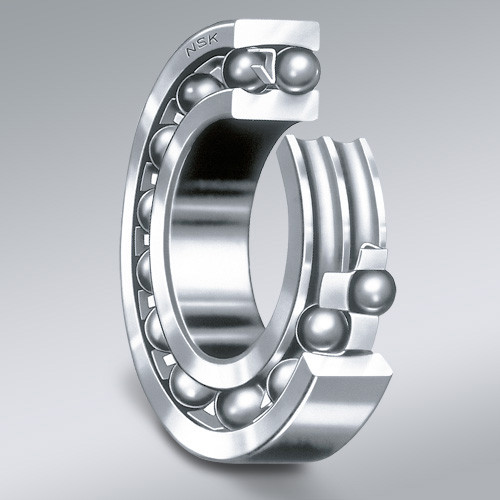
A deep groove ball bearing is a non-separable radial bearing composed of an inner ring, an outer ring, a set of precision steel balls, and a separator cage. The term "deep groove" refers to the deep uninterrupted raceway grooves formed into both the inner and outer rings.
Key structural components include:
Inner Ring: Fits tightly onto the rotating shaft.
Outer Ring: Remains stationary inside the housing bore.
Steel Balls: Spherical rolling elements that minimize rotational friction along the raceway.
Cage (Retainer): Keeps the balls spaced evenly to prevent contact and heat buildup.
Seals or Shields: Protection barriers (metal shields or rubber seals) that retain internal grease and block external dust or moisture.
How Do Deep Groove Ball Bearings Work?
Deep groove ball bearings operate on the principle of rolling friction rather than sliding friction. When the inner ring rotates with the shaft, the steel balls roll smoothly within the deep raceway channels.
The geometry of the raceway groove matches the curvature of the steel balls closely. This tight contour fit allows the bearing to support high radial loads (forces perpendicular to the shaft) as well as moderate axial loads (forces parallel to the shaft) in both directions, enabling smooth operation at extremely high speeds.
Deep Groove Ball Bearing vs Angular Contact Bearing
When designing power transmission systems, engineers often compare deep groove designs with other radial bearings:
Deep Groove Ball Bearing vs Cylindrical Roller Bearing
While deep groove bearings rely on point contact from steel balls, cylindrical roller bearings utilize line contact from cylindrical rollers.
Point Contact vs. Line Contact: Steel balls provide point contact, offering much lower friction and superior high-speed capabilities.
Load Capacity: Cylindrical roller bearings provide significantly higher radial load capacity due to line contact, but cannot handle high speeds or substantial axial loads as efficiently as deep groove bearings.
Open vs Sealed Deep Groove Ball Bearings
Choosing the correct enclosure type directly impacts bearing longevity and maintenance requirements:
Open Bearings: Feature no seals or shields. They require external oil or grease lubrication systems and are ideal for clean, enclosed environments like gearboxes.
Sealed/Shielded Bearings: Pre-lubricated with grease at the factory. They block dirt and contaminants, offering a low-maintenance solution that often lasts for the bearing's entire service life.
ZZ vs 2RS Deep Groove Ball Bearings
For enclosed bearings, selecting the right sealing code is vital for operating conditions:
ZZ (Double Metal Shields): Non-contact steel shields mounted on both sides. They offer low friction, support high-speed rotation, and protect against coarse dirt particles.
2RS (Double Rubber Seals): Contacting synthetic rubber seals on both sides. They provide superior protection against water, fine dust, and moisture, though with slightly higher rotational drag compared to metal shields.
How to Choose Deep Groove Ball Bearings
Selecting the right bearing for your mechanical system requires evaluating several operational parameters:
Load Requirements: Calculate the dynamic radial and axial forces acting on the shaft.
Speed Limits: Verify maximum operational RPM against the bearing's thermal speed limit.
Environmental Exposure: Determine if the installation area is clean, dusty, humid, or exposed to corrosive chemicals.
Dimension Constraints: Match shaft diameter to standard ISO series numbers (e.g., 6000, 6200, 6300, 6400 series).
Deep Groove Ball Bearing Clearance Explained
Internal clearance is the total distance one bearing ring can move relative to the other in either a radial or axial direction.
Clearance Classes: Standard clearance is rated as CN (Normal). Lower clearance is classified as C2, while higher clearance ranges are labeled C3, C4, and C5.
Thermal Expansion: Applications operating at high temperatures require C3 or higher clearance to accommodate thermal expansion of the inner ring without binding the steel balls.
Deep Groove Ball Bearing Precision Grades
Bearing dimensional accuracy and running truth are defined by international standards (ISO 492 or ABEC ratings):
Standard Precision (ISO Normal / ABEC 1): Suitable for general industrial machinery, pumps, and agricultural equipment.
High Precision (ISO P6, P5 / ABEC 3, ABEC 5): Required for electric motors, automotive drivelines, and precision power tools.
Ultra Precision (ISO P4 / ABEC 7): Reserved for high-speed machine tool spindles and aerospace equipment.
Deep Groove Ball Bearing Applications
Due to their versatility, durability, and cost-effectiveness, deep groove ball bearings are utilized across virtually every industry:
Electric Motors & Generators: Provide quiet, low-vibration operation at high speeds.
Automotive Industry: Used in alternators, gearboxes, starter motors, and wheel hubs.
Household Appliances: Essential components in washing machines, air conditioners, and vacuum cleaners.
Agricultural Equipment: Found in tractor power take-off (PTO) shafts and harvesting machinery.
Deep Groove Ball Bearing Failure Causes
Understanding common failure modes helps maintenance technicians prevent premature machine downtime:
Inadequate Lubrication: Insufficient grease or degraded oil causes excessive metallic friction, pitting, and overheating.
Contamination: Ingress of abrasive dirt or water damages raceway surfaces and causes spalling.
Misalignment: Incorrect shaft alignment places uneven load distribution on the steel balls, accelerating fatigue.
Electrical Fluting: Stray electrical currents passing through motor bearings create microscopic craters on the raceways.
Deep Groove Ball Bearing Lubrication Guide
Proper lubrication maintains a protective fluid film between the rolling balls and raceways:
Grease Lubrication: Used in 80%+ of applications. Sealed bearings (2RS/ZZ) come pre-filled with grease (typically filling 30% to 50% of internal free space).
Oil Lubrication: Preferred for high-speed or high-temperature operating conditions where circulating oil assists in heat dissipation.
Deep Groove Ball Bearing Price Factors
When evaluating bulk procurement budgets, bearing prices vary based on:
Raw Material Quality: High-grade vacuum-degassed chrome steel (GCr15 / AISI 52100) or stainless steel increases raw material costs.
Precision Rating: Higher precision classes (P5/P4) demand tighter machining tolerances, raising unit cost.
Sealing & Grease Selection: Specialized high-temperature greases or custom synthetic rubber seals affect final pricing.
How to Find a Deep Groove Ball Bearing Supplier
Partnering with an experienced supplier ensures long-term supply chain stability and product reliability:
Verify Factory Quality Management: Ensure the supplier holds ISO 9001 and IATF 16949 (for automotive grade) certifications.
Request Material Test Reports: Ask for chemical analysis certificates and hardness testing logs for the bearing steel.
Evaluate Inventory Depth: A qualified supplier maintains comprehensive stock across common series (6000, 6200, 6300) for rapid fulfillment.
Deep Groove Ball Bearing Manufacturer Guide
Sourcing directly from a specialized Deep Groove Ball Bearing Manufacturer provides competitive wholesale pricing, custom OEM capabilities, and direct engineering support. Leading manufacturers utilize automated grinding and assembly lines, 100% noise/vibration testing (using S0910 or BVT instruments), and strict metallurgical inspections to guarantee zero-defect performance for global export markets.
- deep groove ball bearings
- cylindrical roller bearings
- sealed bearings
- bearing lubrication
- bearing failure
- bearing steel
- bearing clearance
- bearing applications
- deep groove ball bearing manufacturer
- deep groove ball bearing supplier
- deep groove ball bearing price
- sealed deep groove ball bearing
- 2RS deep groove ball bearing
- Bearing Manufacturer
- Ball Bearing Manufacturer
- Bearing Supplier
- Ball Bearing Supplier
Navigation
Send Us A Message
consult

Jinan Lanyu Import & Export Co., Ltd. is a bearing manufacturing enterprise specializing in the import and export trade of bearings. Covering a total area of 50,000 square meters, the company boasts an annual production capacity exceeding 20 million sets and is dedicated to the manufacture of high-quality bearings.

First class quality service and professional after-sales team.
Get in Touch
*We respect your confidentiality and all information are protected.
