


Why do so many standard drive systems use NTN-6313ZZCM?
For everyday industrial drives, most users are not looking for something exotic. They want a bearing that runs smoothly, handles steady rotational loads, and does not turn routine operation into a maintenance problem. That is where the NTN-6313ZZCM-Deep Groove Ball Bearing fits well. It is widely chosen because deep groove ball bearings are known for simple, reliable service in motors, gear-driven equipment, fans, pumps, and similar machines where stable rotation matters more than specialized load handling.
In practical terms, this type of bearing works well when the drive setup needs low friction, consistent speed, and predictable behavior under normal industrial conditions. For end users, that usually translates into less vibration, smoother running, and fewer surprises during day-to-day operation.
What exactly is the NTN-6313ZZCM-Deep Groove Ball Bearing designed to do?
At a basic level, it supports a rotating shaft while reducing friction between moving parts. The deep groove ball bearing design is especially common because it can handle radial loads efficiently and can also take a certain amount of axial load in both directions. That makes it a very practical match for standard industrial drives, where the load is often mostly radial but not perfectly so.
The "ZZ" style typically indicates metal shields on both sides. For many users, this matters because shielding helps keep out larger contaminants and helps retain lubricant, which supports cleaner and more stable operation in normal factory environments. It is not the same thing as full sealing, but for many drive applications, shields are a sensible balance between protection and running efficiency.
When is this bearing a good fit, and when is it not?
It is a good fit when your equipment runs at regular or moderately high speed, the load is fairly well aligned, and the environment is not extremely dirty, wet, or shock-heavy. That covers a lot of common industrial machinery.
It is usually not the first choice if the machine has heavy misalignment, strong impact loading, or severe contamination that calls for more aggressive sealing or a different bearing type. In those cases, users often need to compare bearing structure, internal clearance, lubrication method, and housing condition instead of choosing by model familiarity alone.
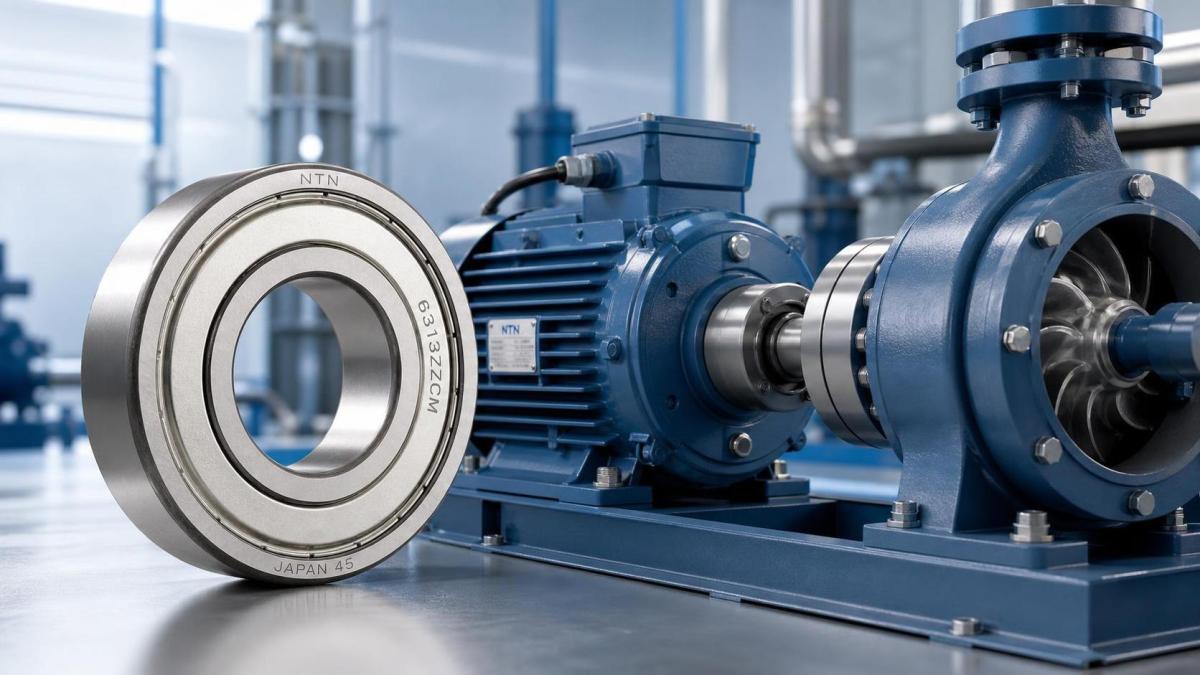
What makes it feel "reliable" in real use?
Reliability usually comes from balance, not from any single feature. A standard industrial drive benefits when the bearing can maintain steady rotation without adding noise, heat, or unstable motion. Deep groove ball bearings are popular because the design itself is straightforward and proven. When the shaft fit, housing fit, lubrication, and load conditions are all reasonable, they tend to perform in a very predictable way.
Users often notice reliability in indirect ways: the machine starts cleanly, vibration stays under control, temperature remains stable, and output stays consistent over long operating periods. That is why this style of bearing shows up so often in standard drives. It supports routine performance without demanding constant attention.
What should a buyer check before choosing this model?
Before ordering, check the machine data rather than relying on the old part number alone. Four items matter most:
- Shaft size and housing size
- Load type: mainly radial, or radial with axial force
- Operating speed and temperature
- Exposure to dust, moisture, or washdown conditions
If one of those conditions has changed since the machine was first installed, the same bearing model may no longer be the best option. That is a common mistake in replacement buying: matching the code but missing the operating context.
Does shielded construction mean maintenance-free?
Not automatically. Shielded bearings reduce exposure and help hold lubricant, but they do not make the bearing immune to poor installation, overload, shaft misalignment, or heat buildup. A drive system can still fail early if the housing is worn, the shaft seat is damaged, or the fit is too tight.
A useful rule is this: if a previous bearing failed unusually fast, do not treat replacement as the whole solution. Check the failure pattern. Noise may point to contamination or damage during mounting. Discoloration can suggest overheating. Uneven wear may indicate misalignment or fit problems. The bearing model matters, but the surrounding conditions matter just as much.
Is there a difference between choosing by model number and choosing by full specification?
Yes, and it is an important one. Many end users focus on the visible model number, but actual performance can also depend on clearance, precision grade, cage material, and material quality. That is why a buyer comparing alternatives should not stop at the outer code.
For example, some drive applications may need attention to internal clearance or operating accuracy, especially where temperature rise or rotational consistency affects output. A comparable product such as NSK 6214ZZCM Deep Groove Ball Bearing shows how these choices are often specified in the market: multiple precision grades, several clearance options, a steel cage, and chrome steel GCr15 construction. That does not make it interchangeable with NTN-6313ZZCM, but it does illustrate the broader point that full bearing selection is based on specification, not just a familiar prefix and suffix.
What are the most common buying mistakes?
The mistakes are usually simple, but expensive:
- Replacing by old invoice description without checking current machine conditions.
- Assuming shielded and sealed bearings behave the same way in dirty environments.
- Ignoring fit tolerances on the shaft and in the housing.
- Overlooking heat, speed, or lubrication changes after a production upgrade.
These are the kinds of errors that lead people to blame the bearing when the actual problem started elsewhere in the drive assembly.
If you are comparing options, what details deserve the closest look?
This is usually enough to separate a good standard replacement from a poor one.
So why does this bearing remain such a common choice?
Because standard industrial drives reward consistency. The NTN-6313ZZCM-Deep Groove Ball Bearing suits that environment well: simple operating needs, smooth rotation, steady support, and broad usefulness across common machines. It is not the answer to every bearing problem, but in the large middle ground of normal industrial service, it remains a practical choice for a reason.
If you are evaluating one for replacement or first-time selection, start with the shaft and housing sizes, then confirm load direction, speed, temperature, and contamination level. That sequence usually tells you faster than anything else whether this familiar model is the right fit for your drive.
Navigation
Send Us A Message
consult

Jinan Lanyu Import & Export Co., Ltd. is a bearing manufacturing enterprise specializing in the import and export trade of bearings. Covering a total area of 50,000 square meters, the company boasts an annual production capacity exceeding 20 million sets and is dedicated to the manufacture of high-quality bearings.

First class quality service and professional after-sales team.
Get in Touch
*We respect your confidentiality and all information are protected.
