


When a buyer asks about NTN-NJ206ET2X-Spherical roller bearing options, the first job is to slow the conversation down and check the designation against the actual bearing type required. The NJ prefix is normally associated with a cylindrical roller bearing design, not a spherical roller bearing. For distributors and agents, that is not a minor catalog detail. It affects internal geometry, axial load behavior, speed expectations, replacement logic, and the credibility of the quote you send out. If you are sourcing for resale, this is the first checkpoint because a wrong type match creates returns, installation disputes, and unnecessary stock pressure.
So the practical approach is not to start with price. Start with bearing identity, then move into structure, operating conditions, and paperwork. That sequence saves more deals than any discount ever does.
Check the designation before you quote anything
A lot of purchasing mistakes begin with mixed naming from old maintenance records, handwritten packing lists, or cross-border RFQs. With NTN-NJ206ET2X, verify three things from the customer’s source document:
- Whether the requested unit is truly an NJ206 series bearing.
- Whether the buyer needs a cylindrical roller bearing or has incorrectly labeled it as a spherical roller bearing.
- Whether any suffixes define cage style, internal design, tolerance, or lubrication requirements in the original specification.
Do not rely on a single line item description from an ERP export. Ask for a photo of the old bearing marking, the equipment BOM, or the OEM spare list. Those documents usually settle the issue faster than a long email thread.
Understand what the NJ design means in service
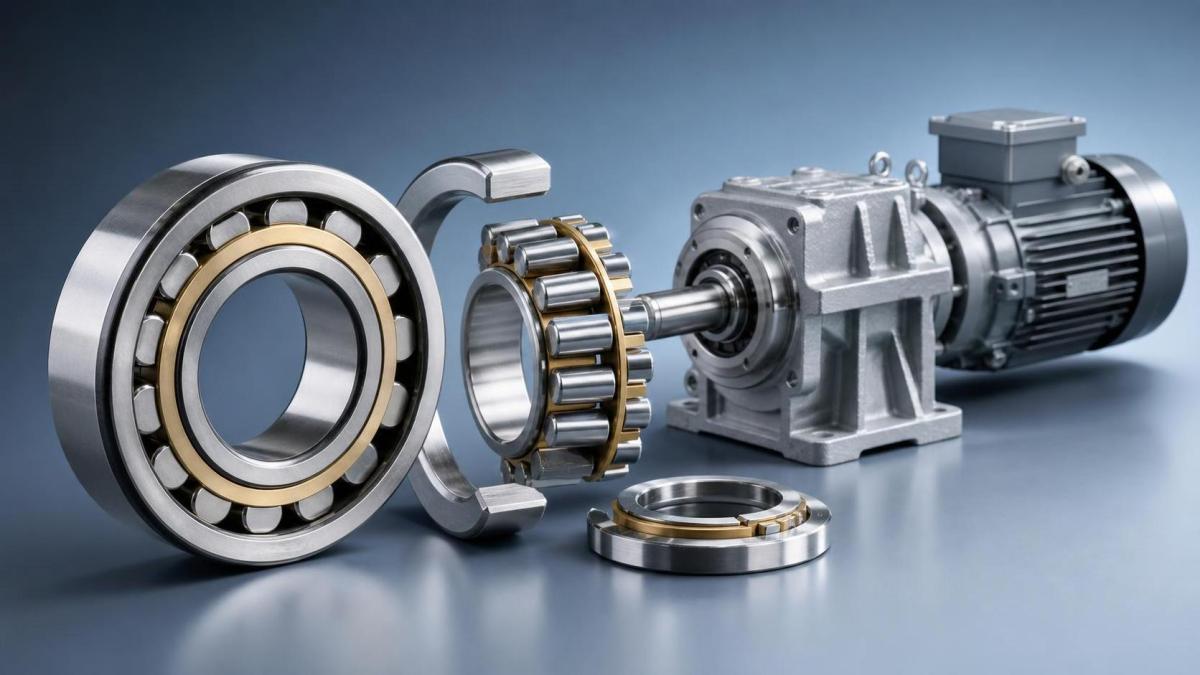
If the NJ206ET2X designation is correct, the buyer is typically looking at a cylindrical roller bearing with a rib arrangement that allows axial location in one direction while carrying heavy radial load. That matters in gearbox shafts, electric motors, pumps, and industrial transmissions where shaft guidance is part of the bearing selection logic.
The sales mistake here is treating it like a general replacement for any rolling bearing in the same bore range. It is not. An NJ design can solve a locating position requirement, but it can also become the wrong substitute if the shaft needs axial displacement in both directions or if the mounted position was designed around another internal structure.
In practical terms, confirm:
- Which bearing position it serves in the machine: locating or non-locating.
- Whether the application sees meaningful axial load in one direction.
- Whether the replacement must match an existing housing and shaft shoulder arrangement.
Look past the basic series and ask about cage and internal design
For resellers, suffixes are where margin problems start. Two bearings may look interchangeable at a glance and still behave differently in heat, speed, shock, or lubrication-starved conditions. If the customer runs continuous duty, contamination-heavy environments, or variable speed cycles, the cage style and internal design should be reviewed before offering alternates.
This is especially important when a buyer asks for “same size, any brand.” Same boundary dimensions do not guarantee the same running behavior. The closer the machine is to its load or speed limit, the less room you have for casual substitution.
Match performance questions to the actual operating condition
A good distributor conversation usually revolves around four operating inputs: load, speed, lubrication, and mounting accuracy. If one of those is missing, you are quoting blind.
If the customer cannot provide operating values, ask a simpler question: what failed first in the previous bearing: noise, heat, cage damage, roller marks, or ring fracture? That often gives enough direction to avoid a poor replacement recommendation.
Use standards and documents the right way
For technical and standard-driven inquiries, the useful documents are the manufacturer catalog page, dimensional tables, suffix definition sheets, and the buyer’s drawing or maintenance record. That sounds obvious, but many trading problems come from mixing data sources. One sheet gives dimensions, another gives a similar suffix, and the quote goes out with a mismatch hidden inside it.
A clean checklist for documentation looks like this:
- Model number exactly as requested
- Brand requirement or approved equivalent status
- Dimensional confirmation from catalog or drawing
- Suffix interpretation tied to the same brand series
- Packaging and marking expectations for resale markets
That last point matters more than many new traders expect. If you are selling into distributor channels, outer box labeling, inner marking clarity, and batch traceability often matter as much as the bearing itself.
Be careful when cross-selling nearby products
Sometimes a customer discussing NTN-NJ206ET2X is not only buying one item but building out a broader bearing list for a machine line or stocking program. In that context, it can make sense to introduce adjacent products, but only when the application family genuinely overlaps. For example, high-speed spindle or precision assembly requirements belong in a different conversation from a cylindrical roller bearing used for radial load support. A product such as SKF 7008CEHCP4A Angular Contact Ball Bearing fits that kind of precision-focused discussion because its product class, available precision grades, and clearance options address another bearing selection problem entirely.
That is the right way to cross-sell: not as a substitute for NJ206ET2X, but as a relevant option when the buyer is sorting multiple shaft-support positions with different technical demands.
Watch the commercial risks that hide inside technical orders
Distributors usually lose money on bearing deals in predictable ways. The quote is technically vague, the customer assumes interchangeability, and the dispute shows up after installation. To reduce that risk, make your quotation reflect the technical checkpoints already reviewed. Include the full model designation, brand, quantity, and any agreed substitute basis. If the order depends on matching an old sample, state that the quote follows the sample marking or customer document reference.
Also separate stock language from engineering language. “Available” does not mean “approved equivalent.” “Similar size” does not mean “same locating function.” Buyers notice that difference, especially experienced maintenance teams.
A sensible review order before you commit supply
For NTN-NJ206ET2X inquiries, use a simple order of operations. Verify the designation. Confirm the bearing type. Check whether the application needs the axial guidance behavior of an NJ design. Review suffix-related construction details. Then align the quote with the customer’s source document and resale requirements. That sequence is practical because it deals with the biggest failure points early, before commercial terms start driving the decision.
If one takeaway matters most, it is this: treat NTN-NJ206ET2X-Spherical roller bearing as a description that needs correction before it needs pricing. Once the designation and function are clear, the rest of the sourcing decision becomes much easier to defend, both technically and commercially.
Navigation
Send Us A Message
consult

Jinan Lanyu Import & Export Co., Ltd. is a bearing manufacturing enterprise specializing in the import and export trade of bearings. Covering a total area of 50,000 square meters, the company boasts an annual production capacity exceeding 20 million sets and is dedicated to the manufacture of high-quality bearings.

First class quality service and professional after-sales team.
Get in Touch
*We respect your confidentiality and all information are protected.
