


Start with the part identity, not the quote
When distributors source NTN-NJ206ET2X-Spherical roller bearing in volume, the costly mistakes usually happen before the first order is placed. A low unit price looks good on paper, but it means very little if the bearing turns out to be mixed stock, wrong clearance, unstable supply, or difficult to move once it lands in your warehouse. The first pass should be practical: confirm exactly what is being offered, whether it matches your downstream demand, and whether the supplier can keep that same specification available across repeat shipments.
For trading companies and regional distributors, this is where margin protection really begins. Authenticity, load suitability, packaging consistency, and export handling matter just as much as price breaks.
Check the exact specification behind the model code
Do not approve a bulk purchase based only on the base model number. Ask for the full marking shown on the bearing, box, and shipping documents. In bearing trade, small suffix differences can change internal clearance, cage design, tolerance class, lubrication expectations, or application fit. If your end buyers expect one version and you deliver another, the return may come back as a performance complaint even when the bearing is technically new.
A useful habit is to compare three things side by side before discussing volume discounts:
- the model on the quotation,
- the model on the product label,
- the model required by your customer or market segment.
If one of those is vague, the deal is not ready.
Make authenticity part of the buying process
Distributors already know this, but it still gets skipped when supply is tight: branded bearings need document consistency. Look at packaging print quality, country-of-origin details where applicable, batch markings, and whether the supplier can provide a coherent export paper trail. You are not trying to build a legal case at this stage; you are checking whether the product identity holds together from carton to invoice.
One red flag is when the supplier answers technical questions with commercial language only. If they can talk about discount tiers but cannot clearly state what is in stock, what lot it comes from, or how the bearing is marked, that usually turns into trouble later.
Match the bearing to the actual working demand
For NTN-NJ206ET2X-Spherical roller bearing purchasing, distributors should not rely on a broad statement like “industrial use” or “replacement demand.” Ask what machines or assemblies your customers are fitting, whether radial load is the main concern, whether shock load is common, and whether they routinely ask for a certain clearance or precision grade. The right buying decision depends on that demand profile.
This matters for inventory cost too. If your market mainly needs general-purpose replacement stock, buying a tighter specification than necessary can make the item harder to rotate. If your buyers serve repair shops that insist on a certain internal clearance, carrying the wrong version creates dead stock even when the model family is correct.
Ask whether stock is deep or just available today
A supplier saying “available” is not the same as a supplier supporting a distribution program. For bulk buying, the useful questions are operational:
- Is the quantity from one batch or mixed batches?
- Can the same specification be replenished next month?
- What is the normal export packing method for this item?
- Will future orders ship under the same brand and specification structure?
Many distributors get trapped by spot inventory that solves one urgent order but cannot support repeat business. If you plan to resell under stable catalog listings, supply continuity is worth almost as much as price.
Review the quote beyond unit price
A serious bearing quote should let you calculate landed cost without guessing. Unit price is only one line. Check carton quantity, pallet standard, transport packaging, lead time, payment term, and whether the quoted goods are export-ready. If the supplier uses carton plus pallet packing, that should appear clearly because packaging affects damage risk and freight efficiency.
For comparison, this kind of structured specification is what you want to see in any bearing discussion, even when reviewing another product line such as TIMKEN 23220EJW33 Spherical Roller Bearing. If a supplier can clearly state dimensions, material, cage type, precision options, clearance options, and transport package, the sourcing conversation becomes much easier to control.
Do a small document check before a large payment
Before sending funds for a bulk NTN-NJ206ET2X-Spherical roller bearing order, ask the supplier to align the proforma invoice, packing details, and item description exactly. This sounds basic, but mismatched descriptions create unnecessary customs friction and internal confusion on your side. Your warehouse team, finance team, and sales team should all see the same product description.
Also check whether your market needs the product listed under a particular brand presentation or neutral trade format. That is not a small detail for distributors. It changes how you label stock, how you quote resellers, and how easily you can combine orders.
Use one sample review to reduce a large-volume mistake
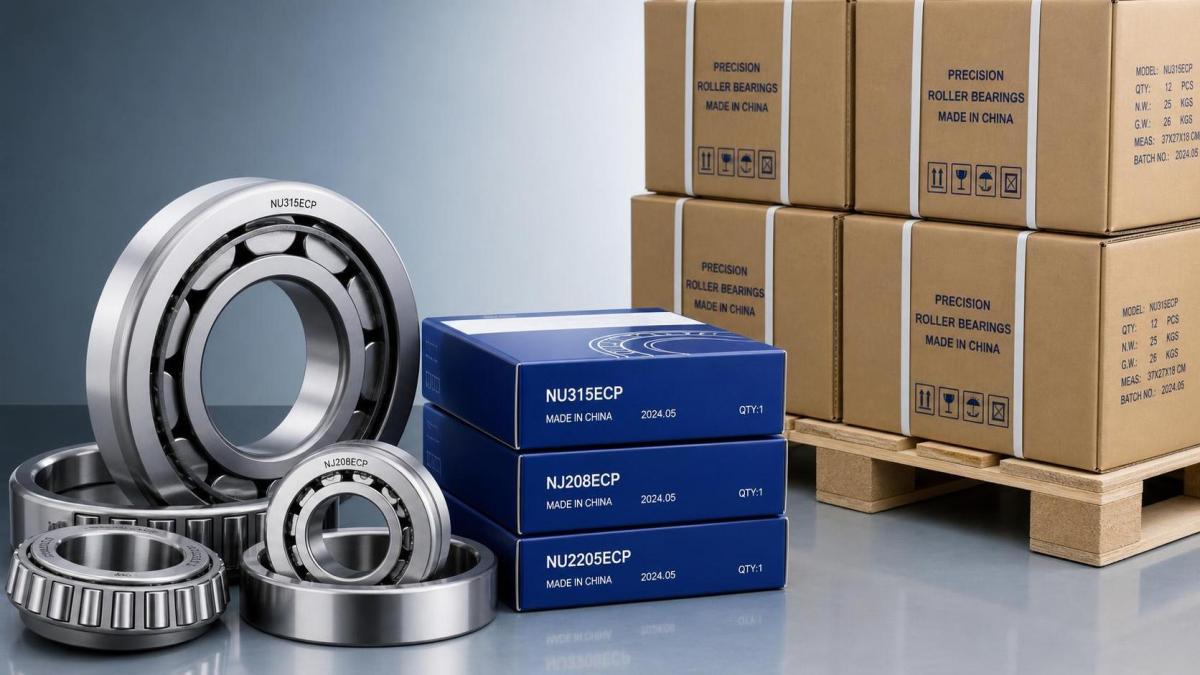
If the order value is meaningful, request a sample or at least a full photo set showing bearing markings, inner and outer packaging, and side labeling. You are checking commercial usability as much as product identity. A bearing can be technically acceptable but still awkward to sell if the box presentation, marking format, or shipment labeling does not fit your channel.
This is especially relevant when you carry several brands and need your warehouse to separate items quickly. Mis-picks cost time, and time becomes margin.
Keep a second reference product in mind
Sometimes the fastest way to evaluate supplier discipline is to see how they present another bearing line. For example, if they can clearly describe a spherical roller bearing with defined dimensions such as 100 mm bore, 180 mm outer diameter, 60.3 mm width, Chrome steel GCr15 material, sheet steel cage, and selectable precision and clearance ranges, that tells you something about their export readiness and technical handling. It does not prove quality by itself, but it does show whether they run a controlled bearing trade process.
What to settle before you place the bulk order
A workable order decision usually comes after this sequence: lock the full model identity, verify how the goods are marked, check whether the specification fits your customer base, confirm batch and replenishment stability, and only then compare final landed cost. That order matters. Distributors who reverse it often buy cheap and sell with difficulty.
If you are buying for stock, choose the offer that you can reorder consistently and explain confidently to your own customers. In bearing distribution, that is what keeps both cost and risk under control.
Navigation
Send Us A Message
consult

Jinan Lanyu Import & Export Co., Ltd. is a bearing manufacturing enterprise specializing in the import and export trade of bearings. Covering a total area of 50,000 square meters, the company boasts an annual production capacity exceeding 20 million sets and is dedicated to the manufacture of high-quality bearings.

First class quality service and professional after-sales team.
Get in Touch
*We respect your confidentiality and all information are protected.
